
Termite Inspection in Youngstown, OH
Book a termite inspection in Youngstown, OH when you see swarmers or mud tubes, or when a home sale needs a wood-destroying insect report. We look, probe and sound the accessible parts of the house and tell you plainly what we found.
Open 24 hours, 7 days a week
What a termite inspection tells you
A termite inspection is a careful visual check for eastern subterranean termites, the main termite in Ohio, and for the damage they leave. The inspector looks for mud tubes, shed wings, damaged wood and the moisture and wood-to-soil contact that invite termites in.
It ends with an answer, not a sales pitch. You learn whether there is visible evidence of live termites, old damage, signs of a past treatment, or none of these. If treatment makes sense, we explain why and what the options are on our termite treatment page.
Ohio State entomologists rate the state's subterranean termite risk as moderate to heavy, and swarms happen over spring and early summer. Many people book after a swarm, but you do not need to wait for one.
Key facts
- Visual check of readily accessible areas, with probing and sounding of wood
- Covers termites, carpenter ants, carpenter bees and wood boring beetles
- Written findings, plus an NPMA-33 form for real estate deals
- No pesticide is applied during an inspection
What the inspector checks in each part of your home
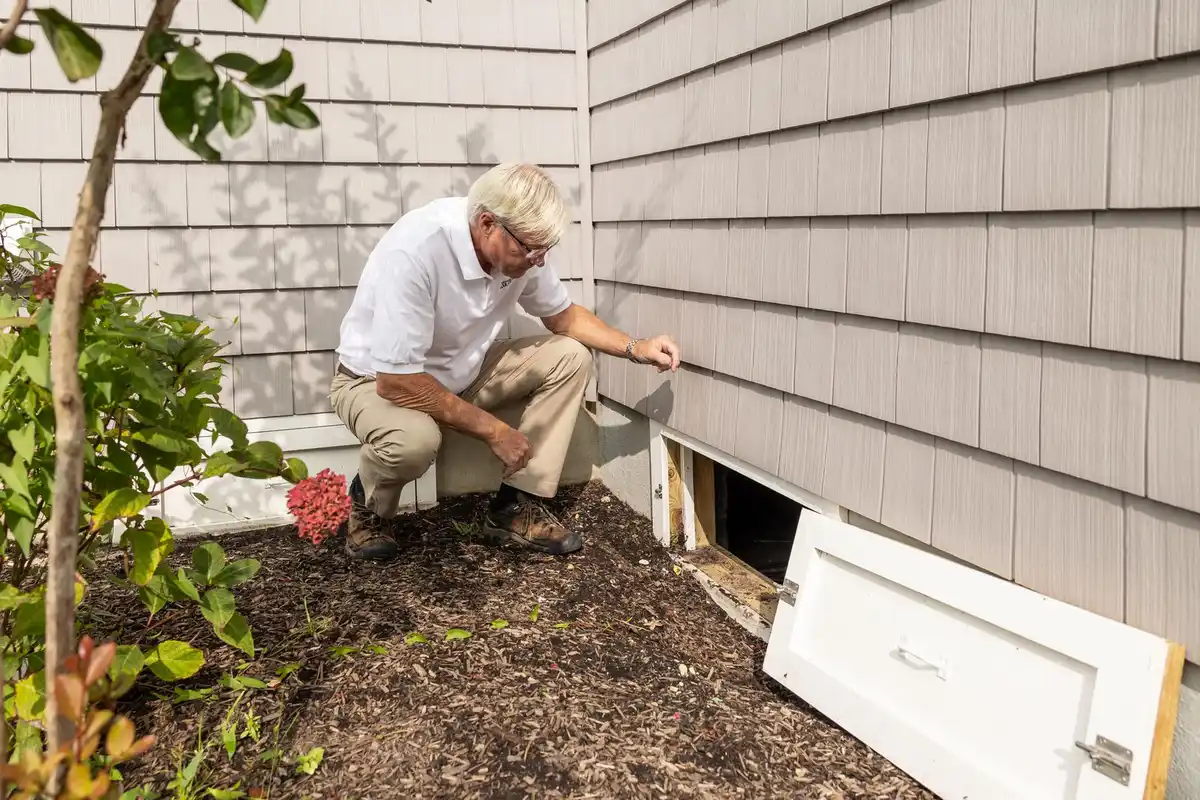
Termites come up from the soil, so the low parts of the house get the most attention. Here is the checklist we follow.
Basement
- Block and poured walls for mud tubes, inside and at corners
- Sill plate and rim joist, probed where wood sits on the foundation
- Floor cracks, drains and pipe openings in the slab
- Wood posts, stair stringers and shelves touching the floor
Crawlspace
- Piers, joists and subfloor for tubes and soft wood
- Damp soil, standing water and poor airflow
- Scrap wood and form boards left on the soil
- Areas too low to enter, which get listed as not inspected
Garage
- The joint where the garage slab meets the house
- Door frames and wall plates at floor level
- Stored lumber, firewood and boxes against walls
- Shed wings near the overhead door and windows
Exterior
- The full foundation line for tubes and hidden cracks
- Porches, decks, steps and posts that touch soil
- Mulch, soil or siding too close to the ground
- Gutters, downspouts and window frames that keep wood wet
Termite or flying ant? 3 things to look at
Both swarm in spring, and both have wings. Save one in a sealed bag and compare it with the drawing below.
If it turns out to be ants, our ant control team handles carpenter ants. Carpenter ants do not eat wood, but they hollow it out for nests and push out shavings that look like pencil sharpener waste, with no soil in the galleries.
WDI inspections and the NPMA-33 form for home sales
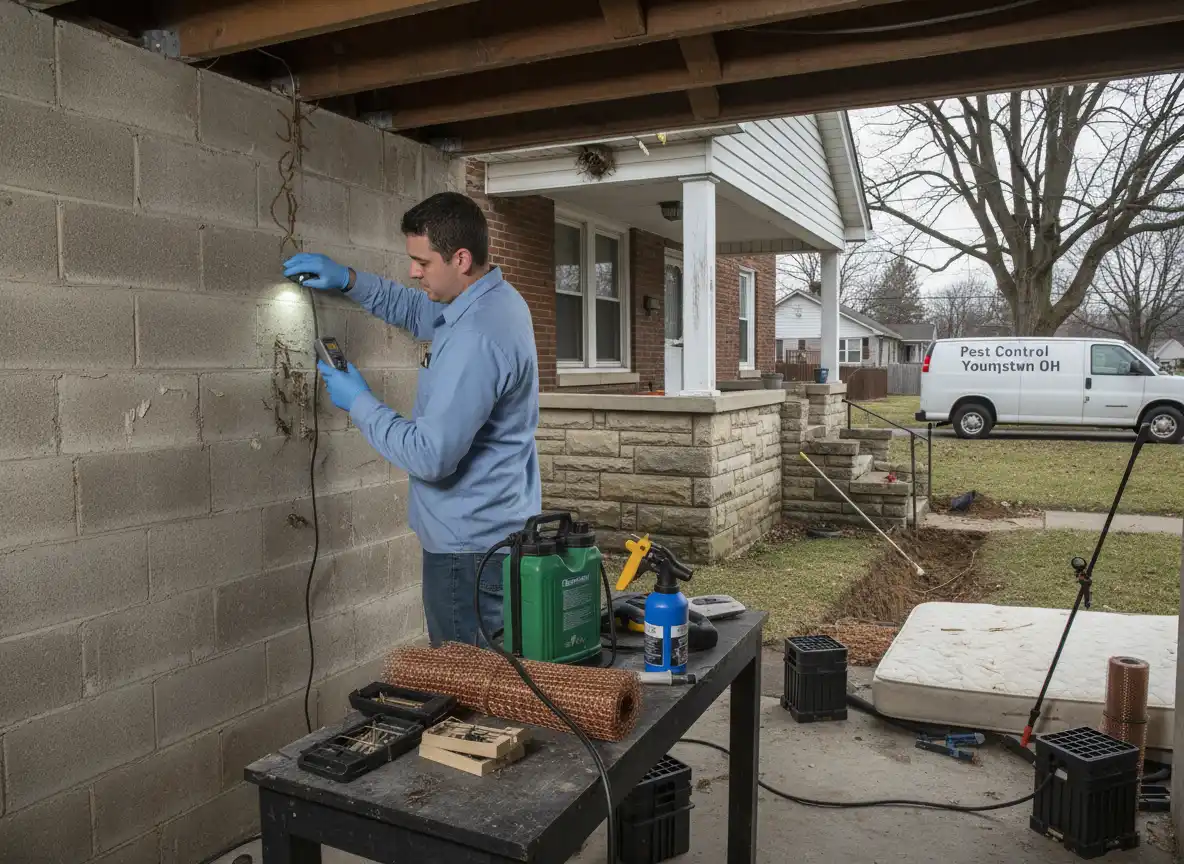
A WDI (wood-destroying insect) inspection is the termite report lenders and buyers ask for. The National Pest Management Association says its NPMA-33 form is the required report for HUD and VA transactions and is commonly used for conventional sales too. The HUD copy of the form states it is approved for FHA and VA loans.
The inspector reports visible evidence of termites, carpenter ants, carpenter bees and reinfesting wood boring beetles, plus visible damage and signs of past treatment. The form also lists areas that could not be inspected.
90-day limit
The form says it is invalid for a mortgage or property transfer if not used within 90 days of the inspection date. Schedule with your closing date in mind.
Source: NPMA-33 form, HUD copyLimits of a visual check
Nothing is torn out. Areas behind finished walls, floor coverings, insulation, furniture or appliances are not opened. A crawlspace with under 24 inches of clearance may be listed as inaccessible.
Source: NPMA-33 form, HUD copyOhio rules apply
In Ohio, WDI inspections for real estate need a commercial applicator license and an ODA pesticide business license. NPMA notes its form does not override state rules.
Source: OSU Extension ANR-0140, ODAThe report records what was visible on the day. It is not a promise that no wood-destroying insects exist in hidden spots, and the form says so in writing. Who orders and pays for it depends on your loan and purchase contract, so check with your lender or agent.
Booking a termite inspection in Youngstown, OH: the 5 steps
Call and share the details
Tell us why you need it: a swarm, tubes, a sale or a refinance. For real estate, have the address, loan type and closing date ready.
Clear the way
Move boxes away from basement walls, open the crawlspace hatch and unlock the garage. Better access means fewer areas listed as not inspected.
Outside walk-around
The inspector circles the foundation, porches, decks and grading, looking for tubes, wood touching soil and wet spots.
Inside, low to high
Basement, crawlspace and garage come first, then other reachable areas. Wood is probed and sounded, and moisture problems are noted.
Findings and next steps
You get the written results. If termites are active, we explain treatment choices. If not, you get tips to keep it that way.

Rating what you found around the house
Use this table to decide how soon to call. When in doubt, a photo with a coin for scale helps us judge it over the phone.
| What you see | What it may mean | Rating |
|---|---|---|
| Mulch or soil piled against siding | A condition that lets termites reach wood unseen | Monitor |
| Damp crawlspace or musty basement corner | Moisture that draws termites and softens wood | Monitor |
| Dry, broken mud tubes with nothing inside | Old activity, or a colony that moved nearby | Call soon |
| Piles of shavings below wood trim | Possible carpenter ants nesting in damp wood | Call soon |
| Round holes on the underside of deck boards or fascia | Possible carpenter bees | Call soon |
| Fresh, moist mud tubes | Active subterranean termites | Call today |
| Winged insects or loose wings indoors | A termite swarm from a colony near or under the house | Call today |
| A home sale with a set closing date | The WDI report must be done inside the 90-day window | Call today |

What Youngstown buyers, sellers and owners ask about termite inspections
Is a termite inspection required to buy a home in Ohio?
It depends on your loan and purchase contract. NPMA says its NPMA-33 form is the required WDI report in HUD and VA transactions, and many conventional buyers ask for one too. Your lender or agent can tell you if your deal needs it.
How long is an NPMA-33 termite report good for?
The form states it is invalid for securing a mortgage or settling a property transfer if it is not used within 90 days of the inspection date. Book it with your closing date in mind.
What happens if the inspection finds termites?
The report notes the visible evidence and damage, and whether treatment is recommended. We then explain treatment options, such as liquid soil treatment or bait stations. How a sale handles it is up to the buyer, seller and contract.
Does old termite damage mean termites are still there?
Not always. The report records visible damage and live evidence separately, and notes signs of a past treatment. Old damage with no live activity may still call for a closer look or a repair check.
Can the inspector see inside my walls?
No. It is a visual inspection of readily accessible areas with probing and sounding. Finished walls, floor coverings, insulation, furniture and appliances are not removed, and those areas are listed as not inspected.
Who is allowed to do a WDI inspection in Ohio?
OSU Extension says anyone doing WDI inspections for real estate needs an Ohio commercial pesticide applicator license. The Ohio Department of Agriculture also requires a pesticide business license for companies that perform them.
Related services: termite treatment, home sealing and exclusion, residential pest control and the areas we serve.
Closing soon or just saw wings?
Call any hour to set up a termite inspection in Youngstown, Austintown, Boardman or Poland.
Pest Control Youngstown OH is a locally owned pest control company. Treatments are applied by Ohio-licensed applicators following the product label.
Sources
- HUD, Wood Destroying Insect Inspection Report Notice (NPMA-33)
- NPMA, Suggested Guidelines for Completing the Revised NPMA-33 Form
- OSU Extension Ohioline, Ohio Commercial Pesticide Applicator Requirements (ANR-0140)
- Ohio Department of Agriculture, Pesticide Regulation
- OSU Extension, Buckeye Yard and Garden onLine: Eastern Subterranean Termite
- OSU Extension Ohioline, Carpenter Ants (HYG-2063)
- U.S. EPA, Termites: How to Identify and Control Them