
Bee and Wasp Removal in Youngstown, OH
Yellowjackets in the lawn, a gray hornet nest in the maple, paper wasps under the porch roof. We identify the insect first, then treat and remove wasp and hornet nests safely. Honey bee swarms go to a beekeeper whenever possible.
Open 24 hours, 7 days a week
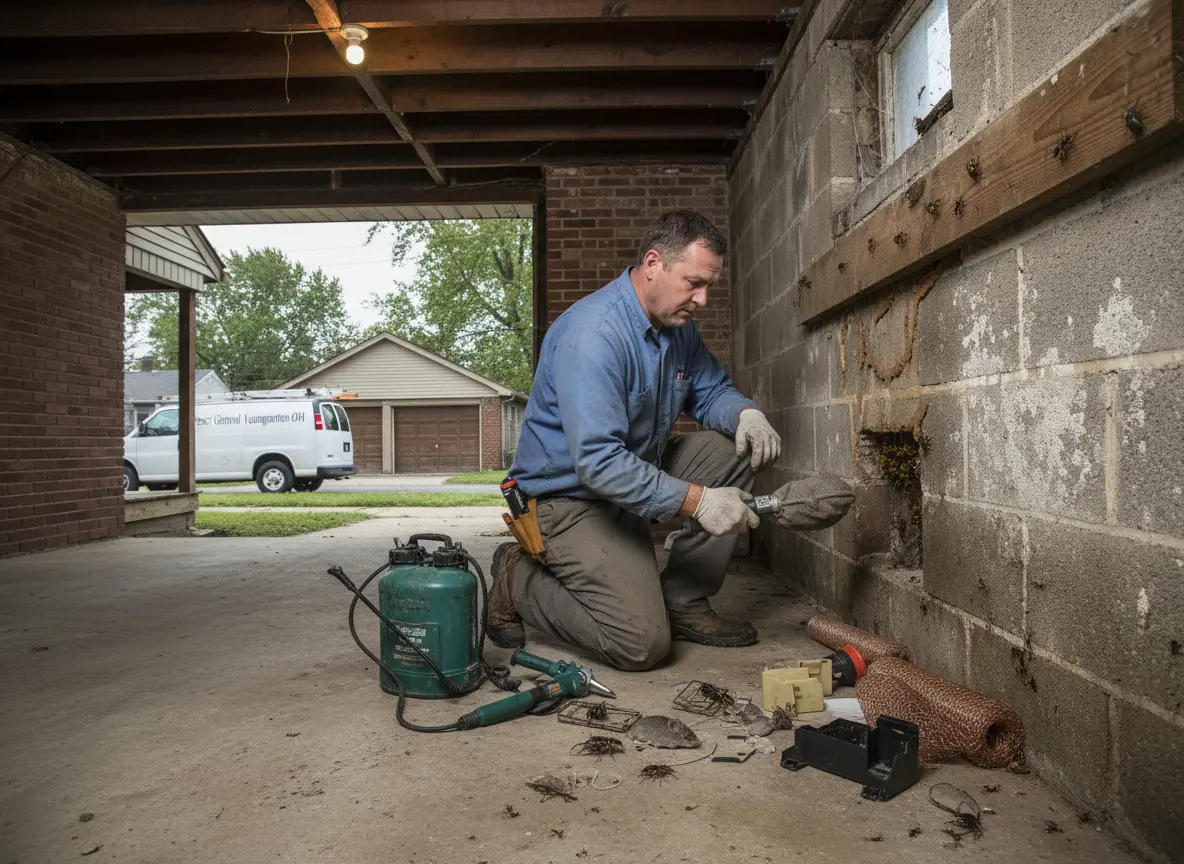
Bee and wasp removal in Youngstown OH, the short version
Most stinging insect calls in the Youngstown area are about wasps, not bees. Yellowjackets, bald-faced hornets and paper wasps all build paper nests that last 1 season. Carpenter bees drill into wood. Honey bees are pollinators and are handled differently.
The right fix depends on which one you have and where the nest sits. A paper wasp nest on a railing is a quick job. A yellowjacket nest inside a wall void or a large hornet nest over a doorway takes protective gear and a careful plan, and it is not a DIY project.
Our technicians are Ohio-licensed applicators. Every product goes on according to its label, and we tell you how long to keep kids and pets away from treated spots.
Key facts
- Yellowjackets cause the most trouble from August to October, when they switch to sweets.
- A yellowjacket nest can reach 4,000 to 5,000 workers by late summer.
- Wasp workers die with the first freezes; only new queens survive winter.
- Honey bee swarms are generally docile and usually move on in 1 to 3 days.
Honey bee, yellowjacket, hornet, paper wasp or carpenter bee?
The nest is often easier to spot than the insect. Match what you see from a safe distance, then call with that detail.
Honey bee
- Fuzzy, golden brown
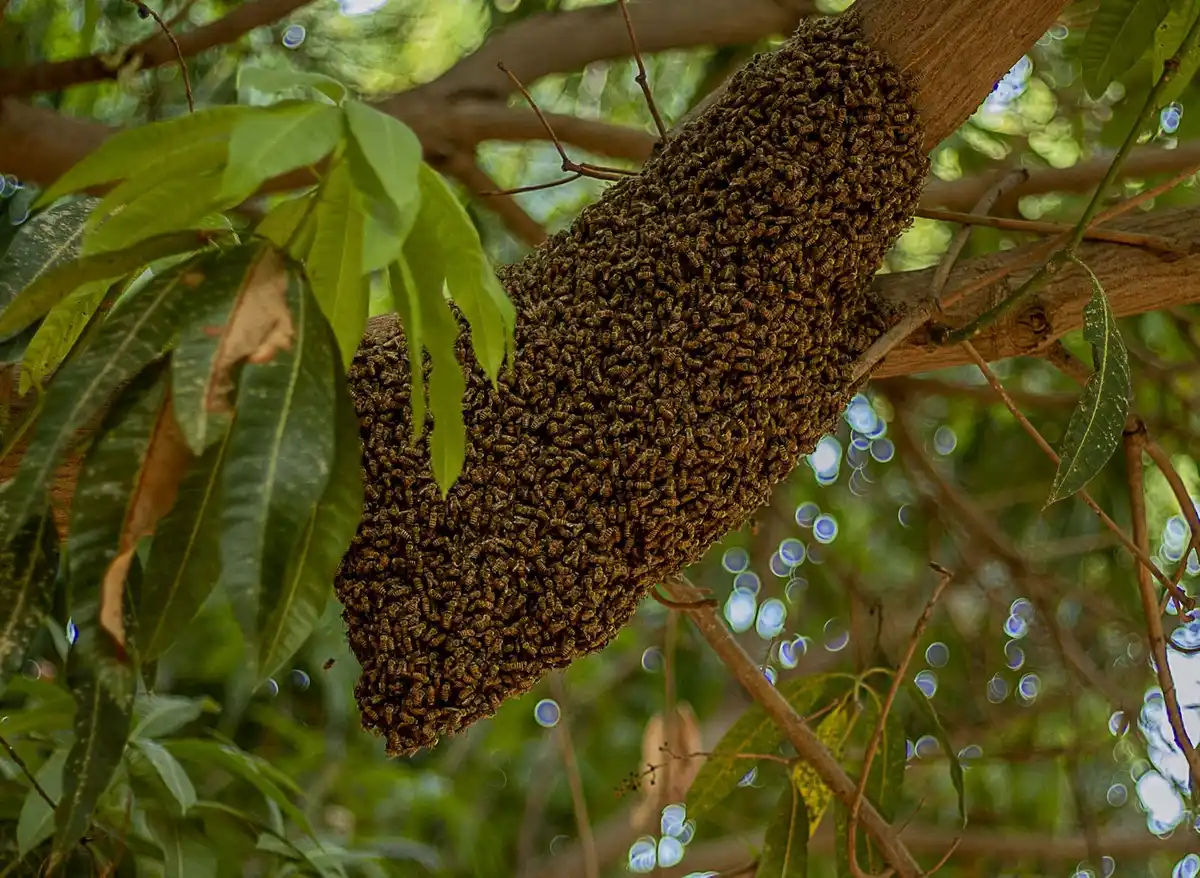
- Swarm hangs as a ball on a branch or fence
- Pollinator: call a beekeeper first
Yellowjacket
- Shiny, hairless, black and yellow bands, about 1/2 inch
- Nest in the ground, mulch, or a wall void
- Look for one busy hole
Bald-faced hornet
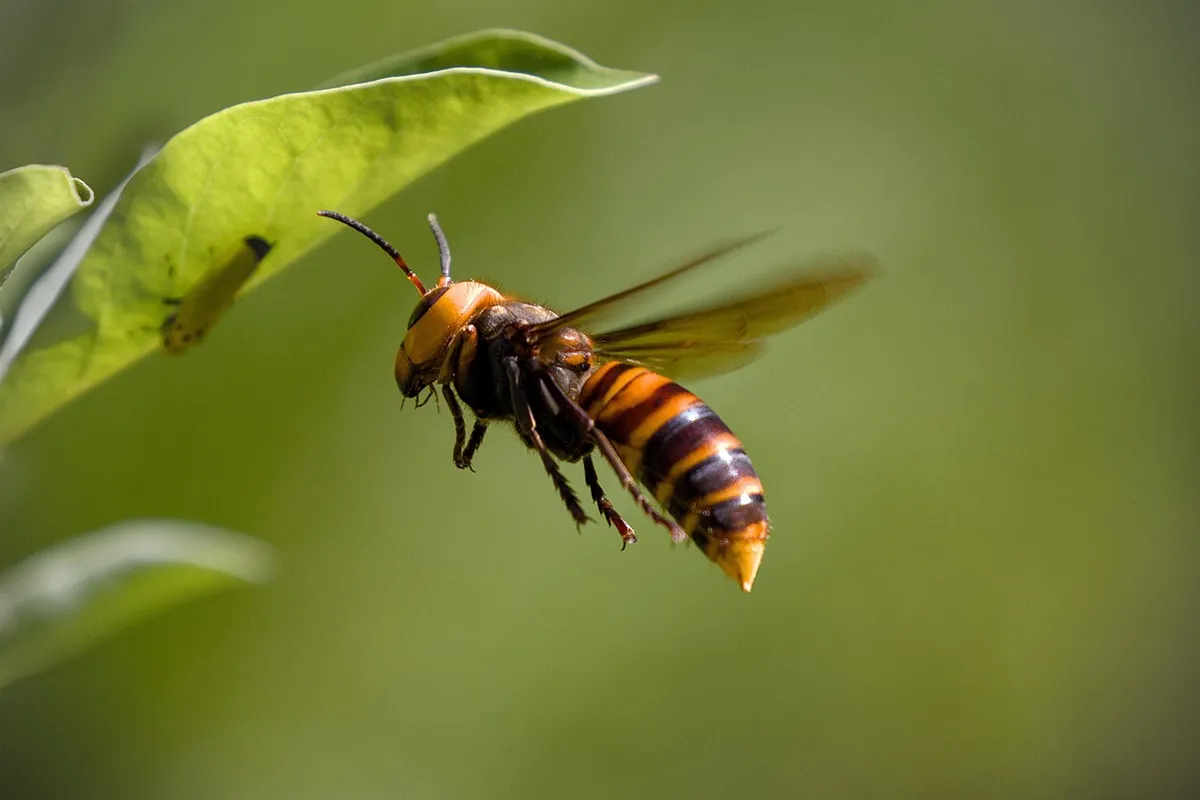
- Black with white face markings
- Gray, football shaped paper nest in trees, shrubs or eaves
- Defends the nest hard
Paper wasp
- Slender, long dangling legs
- Open comb, no outer cover, under eaves, railings, grills
- Usually under 25 wasps
Carpenter bee
- Large, shiny black, mostly bare abdomen
- Round hole about 1/2 inch wide in bare wood
- Males cannot sting
Not sure? The Ohio State Beekeepers Association warns that yellowjackets and wasps are often mistaken for honey bees. A clear photo taken from a distance helps us sort it out on the phone.
Stung and having trouble breathing, chest pain, serious swelling, nausea, heavy sweating or slurred speech? Call 911 now. These can be signs of a severe allergic reaction. We are a pest control company and cannot give medical advice; see the CDC NIOSH guidance in the sources below.
A honey bee swarm in your yard? Call a beekeeper first
A swarm is a cluster of honey bees with their queen, resting while scouts look for a new home. Ohio State University's ag safety program says swarm bees are generally docile because they have no brood to defend, and a swarm usually stays 1 to 3 days at most.
Leave it alone, keep people and pets back, and do not spray it. Then find a beekeeper. The Ohio State Beekeepers Association keeps a swarm removal list you can search by county, Mahoning County included. Extension offices often keep local lists too.
It changes once bees move into a wall, chimney or hollow tree. At that point it is an established colony, not a swarm, and removal may mean opening the structure. We can help confirm the insect and talk through options; when it is honey bees, a beekeeper who does structural removals is usually the best fit.
Beekeepers in Ohio register their apiaries with the Ohio Department of Agriculture each year under Ohio Revised Code 909.02. If you plan to keep the bees yourself, that rule applies to you.
When stinging insects peak around Youngstown
Wasp nests start small in spring and are at their biggest in late summer. That is when most people find them, usually by mowing over a ground nest or reaching into a shrub.
After the first hard freezes, the workers die and the nest is abandoned. Wasps do not reuse last year's nest, so an empty gray nest found in November usually does not need treatment. Fertilized queens spend winter under loose bark, in logs or in soil cavities and start new nests in spring. Timing comes from OSU Extension, Iowa State Extension and Penn State Extension.
Our 4 stages for wasp and hornet nests
Identify
We confirm the insect and find the nest, including hidden entry holes in siding, soffits or the lawn. Honey bees are routed to a beekeeper.
Plan for safety
We check who uses the area, where kids and pets will be, and the safest approach. Treatment is often timed for early morning or evening, when wasps are slow and at the nest.
Treat the nest
A licensed technician in protective gear treats the nest or entry point with a labeled product, directly, not just the outside surface.
Remove and prevent
Reachable nests are removed once activity stops. We point out spots that invite new nests, like bare wood for carpenter bees.

Carpenter bees are a different job
OSU Extension says female carpenter bees bore round holes about 1/2 inch wide and dig galleries 4 to 6 inches long, often reusing old ones year after year. They prefer bare or weathered softwood such as cedar, pine and fir.
After treating active holes, the long-term fix is filling holes in fall and keeping wood painted or sealed. Many homeowners pair this with home sealing and pest exclusion for gaps where yellowjackets get into walls.
What to do, and what not to do, near a nest
Do
- Keep kids and pets indoors or away from the area.
- Note where wasps fly in and out, and take a photo from a distance.
- Skip mowing or trimming near a ground or shrub nest.
- Cover sweet drinks and trash outdoors in late summer.
- Call a beekeeper for a honey bee swarm.
Don't
- Try to knock down, burn, flood or bag a large nest yourself.
- Seal a wall hole while wasps are still active inside.
- Spray only the outside of a hornet nest from far away; it can stir up the colony.
- Spray or swat at a honey bee swarm.
- Climb a ladder near an active nest.
OSU Extension's yellowjacket fact sheet puts it plainly: it is highly recommended to hire a professional to kill and remove wasp nests. Need help now? Call (888) 752-0103.
Common questions about wasps, hornets and bees in Youngstown
Do you kill honey bees?
We send honey bee swarms to a beekeeper whenever possible, because honey bees are pollinators. The Ohio State Beekeepers Association lists swarm collectors by county, including Mahoning County. Established colonies inside walls are a bigger job, and we talk through options case by case.
Why are yellowjackets getting so aggressive in late summer?
By August, yellowjacket nests are at full size and the workers switch from protein to sweets. OSU Extension notes this shift happens from August to October, which is why they crowd picnics, trash cans and soda cans.
Should I remove an old wasp nest in winter?
Usually it is not needed. Workers die with the first freezes, and wasps build a new nest each year instead of reusing the old one. You can knock down an empty, inactive nest once you are sure nothing is flying in or out.
Will carpenter bees come back to the same wood?
Often, yes. OSU Extension says carpenter bees prefer to reuse old galleries. Filling holes in fall and keeping exposed wood painted or sealed are the main ways to cut down on return visits.
Is it safe for my kids and pets after a nest treatment?
Treatments are applied by a licensed technician following the product label. Keep kids and pets away from treated spots for as long as the technician directs. We will tell you before we leave.
What should I do if someone is stung?
If there are signs of a severe allergic reaction, such as trouble breathing, chest pain, serious swelling or slurred speech, call 911 right away. For anything else, follow guidance from a doctor or the CDC. We do not give medical advice.
Nest over a door or in the wall? Let a pro handle it
We remove wasp and hornet nests across Youngstown and nearby communities like Poland and Struthers. Also see mosquito and tick control and residential pest control, or browse all Youngstown areas.
Call (888) 752-0103Pest Control Youngstown OH is a locally owned pest control company. Treatments are applied by Ohio-licensed applicators following the product label.
Sources
- OSU Extension, Yellowjackets (HYG-2075)
- OSU Extension, Carpenter Bees (HYG-2074)
- Ohio State University Ag Safety, Have No Fear, Honey Bee Swarms Are Near
- Ohio State Beekeepers Association, Swarm Removal list
- Ohio Revised Code 909.02, Apiary registration (Ohio Department of Agriculture)
- Iowa State University Extension, Social Wasps
- Penn State Extension, Baldfaced Hornet
- CDC NIOSH, Insects and stinging insects fast facts
- Ohio Revised Code 921.06, Commercial applicator license