
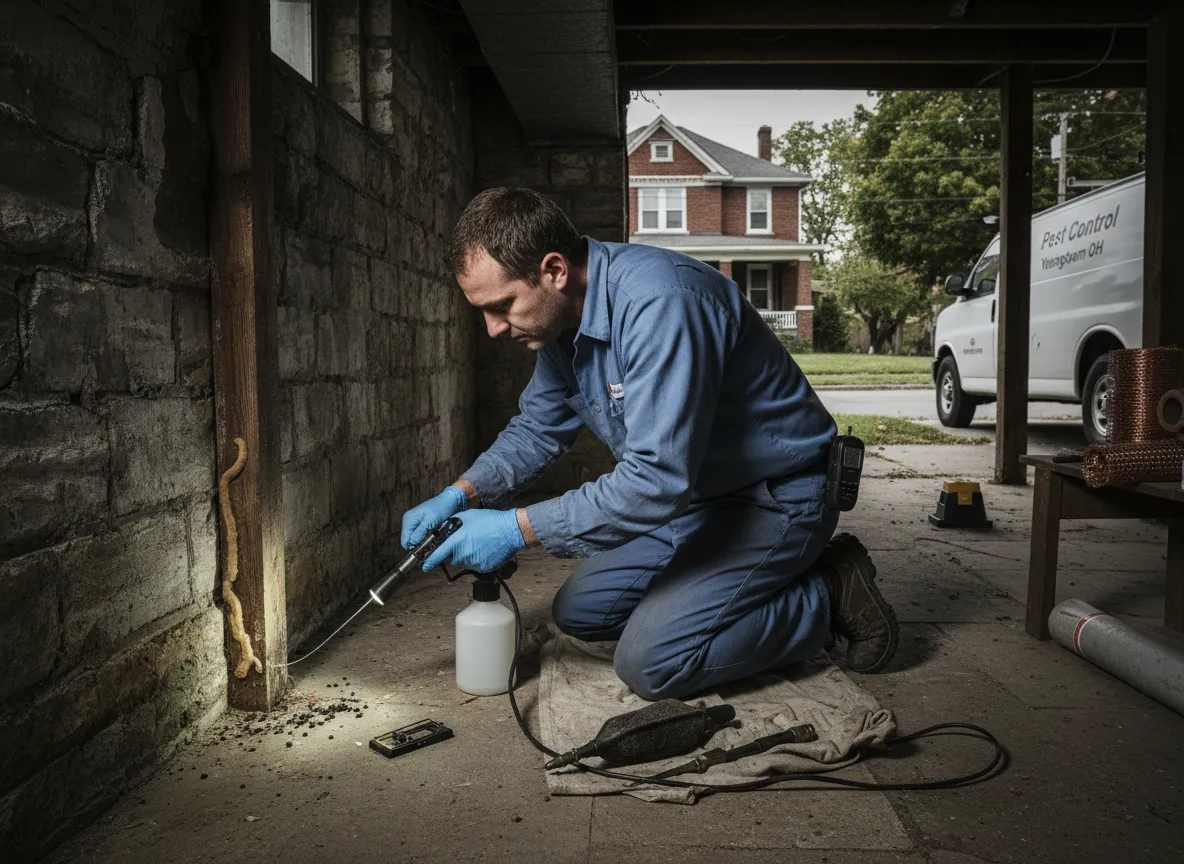
Ant Control in Youngstown, OH
Spraying the ants you see rarely ends the problem. We follow the trail back to the colony and treat it there, then fix the moisture and gaps that let ants in.
- Open 24 hours, 7 days a week
- Ohio-licensed applicators
- Bait-first, targeted treatment
Ant control in Youngstown, OH starts with knowing the ant
Good ant control in Youngstown, OH means treating the colony, not just the line of ants on your counter. Ohio State University Extension explains why: ants quickly sense treated surfaces and walk around them until the spray wears off. Slow-acting baits work better, because workers carry the bait home and share it with the nest.
The kind of ant changes the plan. Tiny kitchen ants need bait on their trail. Pavement ants need their entry cracks found. Carpenter ants need their nest and the wet wood behind it found, because they can damage a home over time.
Not sure what you have? Call (888) 752-0103 and describe the size, color and where you see them.
Key facts
- Carpenter ants are the largest ants in Ohio and the top ant question OSU Extension gets.
- Carpenter ant parent nests start in moist, decayed wood.
- Carpenter ant swarmers usually appear March to July.
- Pavement ants may nest indoors near heat sources in winter.
3 ants we find most in Youngstown homes
Size is the first clue. Where the ants show up is the second.
Carpenter ant
- Large, often black; workers about 1/4 to 1/2 inch
- Smooth, evenly arched back seen from the side
- Nests in wet or decayed wood: window frames, porch roofs, skylights, crawl spaces
- Leaves wood shavings that look like pencil sharpener waste
Odorous house ant
- Tiny, brown to black, about 1/10 inch
- Smells like rotten coconut when crushed
- Forages indoors for sweets and other food
- Forms long trails to sinks, counters and pet bowls
Pavement ant
- Light to dark brown or blackish, 1/12 to 1/4 inch
- Fine parallel grooves on the head and back
- Nests under stones, in pavement cracks and along curbs
- Small soil piles in sidewalk or slab cracks are a clue
Follow the trail: from the nest outside to your kitchen
Every ant you see on the counter is a worker sent from a nest you usually cannot see. This is why we treat the trail, not just the ants.
This is also why store sprays often fail. OSU Extension says to place bait stations directly on ant trails, away from children and pets, and to avoid mixing baits with sprays or dusts for carpenter ants. Killing the trail with a spray can cut off the very workers who would have carried bait home.
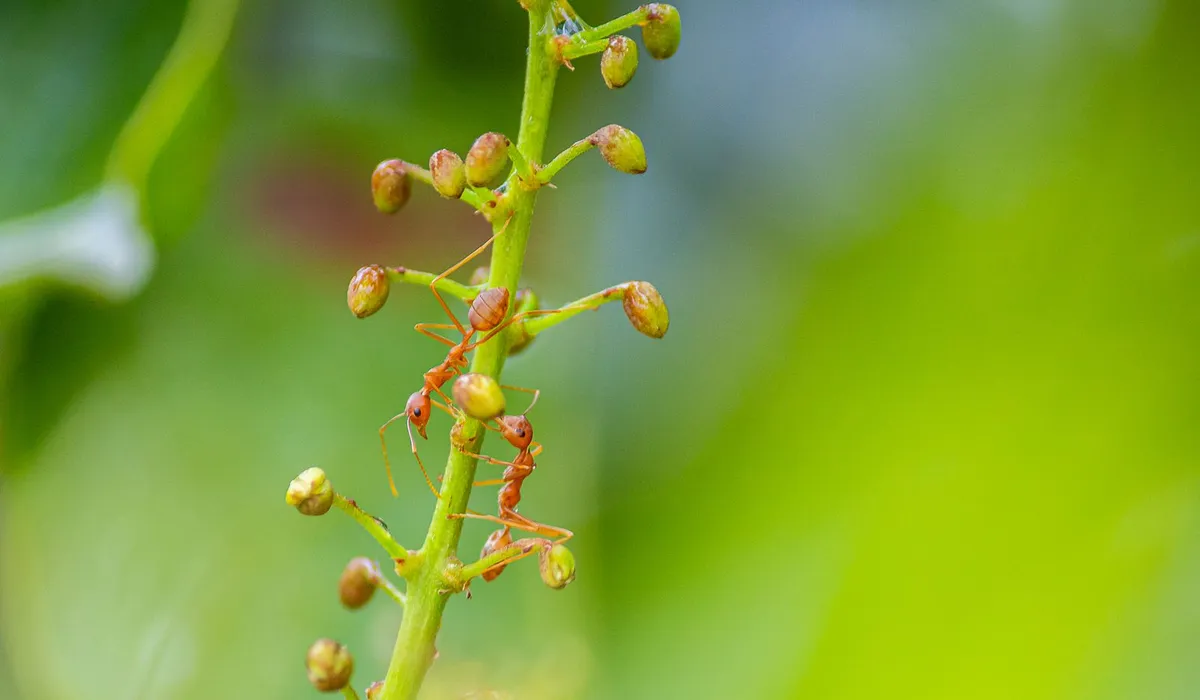
Our ant treatment plan, step by step
Identify the ant
We confirm the species from the ants themselves, the trail and any debris. Carpenter ants, odorous house ants and pavement ants each need a different plan.
Trace trails to entry points and nests
We follow trails along baseboards, pipes and foundation cracks. For carpenter ants, OSU notes a parent nest in moist wood can have satellite nests in drier, warmer spots, so we look for both.
Bait the trails or treat the nest
Small ants get slow-acting bait on active trails. Carpenter ant nests may get a targeted treatment into the nest gallery. All products are applied by an Ohio-licensed applicator following the label.
Fix moisture and seal entry points
Wet wood draws carpenter ants, so we point out leaks at gutters, window frames and skylights. OSU also advises removing dead stumps within 50 feet of the house. Gaps can be closed through our home sealing and pest exclusion service.
Check back
We confirm trails have stopped and refresh bait if needed. Outdoor perimeter work can be repeated during the warm season when the plan calls for it.
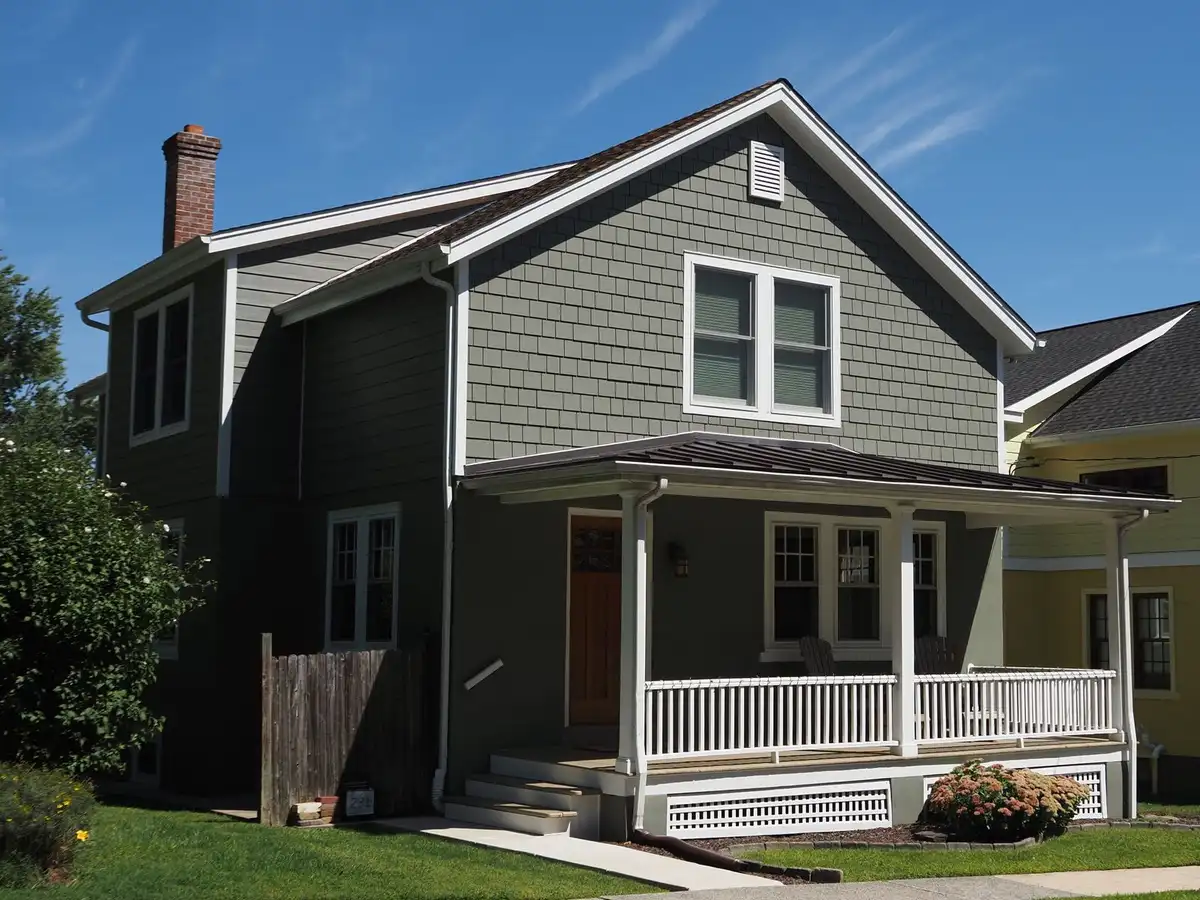
Bait stations go where kids and pets cannot reach them. Keep kids and pets away from treated areas as your technician directs.
How serious is your ant problem?
Find what you are seeing in the table. The right column tells you how soon to act.
| What you see | What it may mean | Action |
|---|---|---|
| A few ants on the patio or sidewalk in summer | Normal outdoor foraging | Monitor |
| Small soil piles in driveway or slab cracks | Pavement ant nest below | Monitor |
| A steady trail of tiny ants to the sink or pet bowl | Odorous house ants with a nearby nest | Call soon |
| Pavement ants indoors in winter near a furnace or heated slab | Ants nesting near a heat source | Call soon |
| Large black ants seen indoors again and again | Possible carpenter ant nest in the structure | Call soon |
| Wood shavings under a window, porch roof or skylight | Carpenter ants digging galleries | Call today |
| A faint rustling or crinkling sound inside a wall | Active carpenter ant nest | Call today |
| Winged insects swarming indoors | Ant or termite swarmers; needs ID | Call today |

Rated "Call today"? Call (888) 752-0103. We are open 24 hours, 7 days a week.
Carpenter ants vs termites: how to tell them apart
Both show up in spring and both involve wood, but they are different problems with different treatments.
Carpenter ants
- Waist
- Pinched, like a figure 8
- Antennae
- Bent at an elbow
- Wings (swarmers)
- Front wings much larger than the back wings; ants keep their wings after swarming
- Wood damage
- They do not eat wood. They chew smooth, clean galleries and push out shavings.
- Swarm timing in Ohio
- Usually March to July
- What to do
- Find the nest and the moisture behind it
Eastern subterranean termites
- Waist
- Thick, with straight sides
- Antennae
- Straight and bead-like
- Wings (swarmers)
- Front and back wings about the same size; wings drop off soon after swarming
- Wood damage
- They eat wood along the grain and leave soil and fecal spots in the galleries
- Swarm timing in Ohio
- Spring and early summer
- What to do
- Book a termite inspection
Termites also build mud tubes on foundation walls and piers. If you find mud tubes or a pile of shed wings on a windowsill, see our termite treatment page.
Common ant questions from Youngstown homeowners
Why do ants keep coming back after I spray?
Spray kills only the ants it touches, and ants quickly learn to avoid treated surfaces. The nest keeps sending new workers. Slow-acting bait that workers carry home is what reaches the colony.
Do carpenter ants mean my house has structural damage?
Not always, but they can cause damage over time. Carpenter ants usually start in wood that is already wet or decayed. Finding the nest and fixing the moisture early limits the harm.
When is ant season in Youngstown?
Most ant activity happens in the warm months, and carpenter ant swarmers usually show up from March to July. Pavement ants can also nest indoors near a heat source during winter. Ants seen inside in cold months deserve a closer look.
How can I tell carpenter ants from termites?
Carpenter ants have a pinched waist, elbowed antennae and front wings larger than the back wings. Termites have a thick waist, straight antennae and 4 wings of about equal size. Save a sample in a clear bag and we will identify it.
Is ant bait safe around my kids and pets?
Bait is placed in stations or hidden spots out of reach, and applied by a licensed applicator following the label. Keep kids and pets away from treated areas as your technician directs. Tell us about pets when you book.
Should I wipe up the ant trail before the visit?
Clean up food spills, but leave the trail itself alone if you can. The trail shows us where ants enter and where bait will work best. Please do not spray it before we arrive.
Get the colony, not just the trail
Call for ant control in Youngstown, Boardman, Poland, the South Side and other nearby areas. Want ants handled with other pests? Ask about residential pest control.
Pest Control Youngstown OH is a locally owned pest control company. Treatments are applied by Ohio-licensed applicators following the product label.