
Rodent Control in Youngstown, OH
Our rodent control in Youngstown, OH starts by finding how mice or rats get in, then removes the ones inside and closes the gaps so new ones stay out. Traps and bait are placed by Ohio-licensed applicators following the label, with kids and pets in mind.
Open 24 hours, 7 days a week

A mouse can fit through a hole about the size of a dime.
Source: Penn State ExtensionA rat can fit through a hole about the size of a quarter.
Source: Penn State ExtensionThe CDC puts it another way: a mouse fits through a hole the width of a pencil.
Source: CDC5 entry points we check on every Youngstown house
Mice and rats rarely chew a new hole from scratch. They find a gap that is already there and widen it. These are the spots that light up most often during an inspection.
The CDC also lists gaps inside, under and behind kitchen cabinets, around pipes under sinks and washing machines, around doors and windows without weather stripping, and in rafters, gables, eaves and soffits. In older homes with stone or block foundations, mortar joints and pipe openings are worth a close look.

House mouse or Norway rat? How they differ
These 2 rodents behave very differently, so the plan changes with the animal.
House mouse
- Size
- About 3 inches long, not counting the tail.
- Droppings
- About 1/8 inch, pointed, like a grain of rice.
- Nests
- Behind walls, in storage boxes, cabinets and furniture.
- Range
- Stays within about 10 to 30 feet of its food.
- Behavior
- Curious and easy to trap. Needs little food and does not need water daily.
- Breeding
- Can produce 6 to 10 litters a year.
Norway rat
- Size
- Up to a foot long without the tail, and can weigh over 1 pound.
- Droppings
- Up to about 3/4 inch, blunt and capsule shaped, like a raisin.
- Nests
- Burrows in rubbish, along foundations and under buildings or slabs.
- Range
- Active within about 50 to 150 feet of its nest.
- Behavior
- Cautious around new objects and harder to trap. Needs water every day.
- Opening
- Can squeeze through about 1/2 inch.
Why it matters: mouse traps go close together near droppings, because mice stay near food. Rats are wary of new objects, so they need larger, sturdier traps placed along their runways and more patience. A burrow along the foundation points to rats almost every time.
How we handle rodent control in Youngstown, OH
Inspect
We trace droppings, rub marks and gnawing back to runways, nests and the gaps they came through, inside and out.
Identify
Mouse or rat sets the type of traps, how many, and where. Droppings size and burrows usually tell us.
Reduce
Snap traps go along walls where rodents travel. Any bait is placed in locked, tamper-resistant stations as the label directs.
Seal and monitor
Gaps are closed with rodent-proof materials, then we recheck traps until there is no new activity.
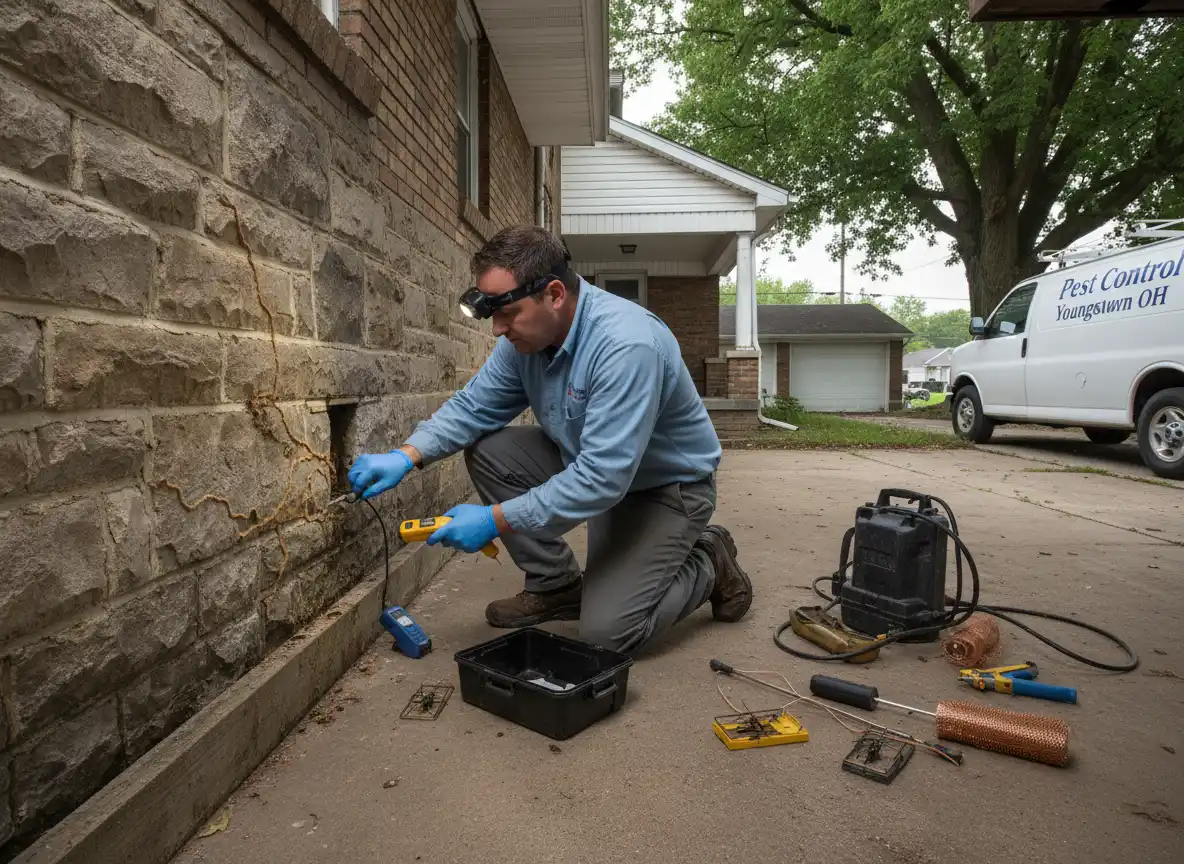
Trapping alone keeps you on a treadmill if the gaps stay open. Sealing alone can trap mice inside the walls. Doing both, in that order, is what ends the problem.
For sealing, the CDC suggests steel wool held in place with caulk or spray foam for small holes, and lath screen, metal, cement, hardware cloth or metal sheeting for larger ones. Penn State Extension adds copper mesh and silicone sealant to that list.
Signs mice or rats are already inside
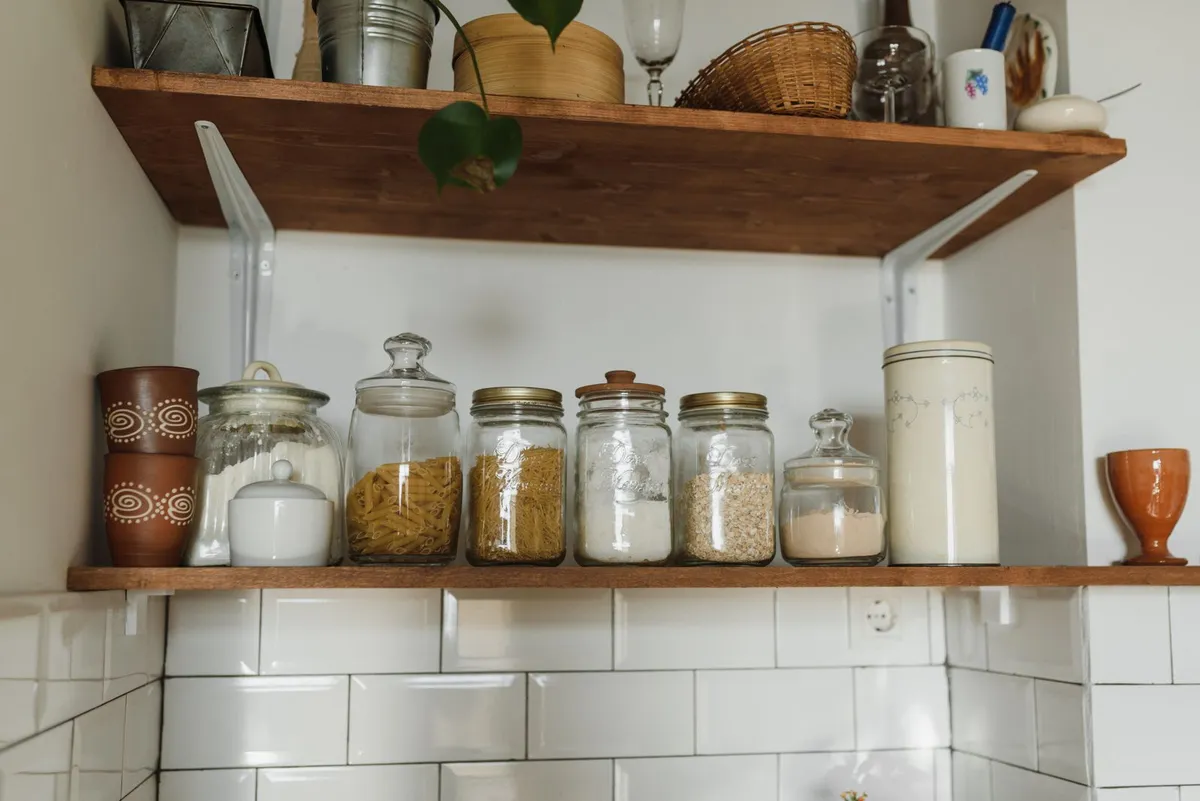
Rodents are active at night, so most people find the evidence before the animal. Droppings are the clearest clue, and their size tells you mouse or rat.
Rodent control vs home sealing
They work as a pair, but each one has its own job. Switch the tabs to compare.
Rodent control: remove what is already inside
- Best when you see droppings, gnawing or live rodents
- Traps along runways and bait stations where allowed
- Follow-up visits to check and reset traps
- Includes sealing the main entry points we find
Home sealing: keep the next ones out
- Best for prevention or after rodents are gone
- Whole-house work on vents, pipes, doors and foundation gaps
- Also blocks many insects and other pests
- No traps or pesticide needed for the sealing itself
Have live activity now? Start with rodent control. Want a full exterior job, or had mice last fall and want to stop a repeat? Look at home sealing and pest exclusion. Seeing insects too? Our residential pest control and cockroach control pages cover those.

Keeping kids and pets safe around traps and bait stations
Most rodent work can be done with little or no bait inside the living space. Here is how we keep it that way, and what you can do.
Do
- Tell us about kids, pets and any pet that roams outside
- Keep kids and pets away from traps and stations as the technician directs
- Air out a room for 30 minutes and wear gloves before cleaning droppings
- Soak droppings with disinfectant or 1.5 cups of bleach per gallon of water for 5 minutes, then wipe with paper towels
Don't
- Sweep or vacuum droppings, which can put germs into the air
- Scatter loose bait pellets anywhere
- Open, move or shake bait stations
- Use glue boards, which leave a live mouse to deal with
EPA rules require tamper-resistant bait stations wherever children under 6, pets or wildlife can reach the bait. Penn State Extension advises against rodenticides inside homes. If a child or pet may have eaten bait, call Poison Help at 1-800-222-1222 or your vet right away.
Mice and rat questions we hear in Youngstown
How do mice get into Youngstown houses?
Through gaps that already exist. A mouse fits through a hole about the size of a dime, so openings around utility lines, pipes, dryer vents, roof vents, garage doors and foundation cracks are enough. An inspection finds which ones they are using.
Do you use poison for mice inside the house?
Indoors we rely mainly on traps. Penn State Extension advises against rodenticides inside homes because of risks to kids and pets, and because rodents can die in walls and cause odors. When bait is used, it goes in locked stations as the label directs.
Is it a mouse or a rat?
Check the droppings. Mouse droppings are about 1/8 inch and pointed, like rice, while Norway rat droppings are up to about 3/4 inch and blunt, like a raisin. Burrows along the foundation point to rats.
How long does it take to get rid of mice?
It depends on how many there are and how fast the gaps get sealed. Mice can have 6 to 10 litters a year, so leaving entry points open lets the problem restart. We keep checking traps until there is no new activity.
Can I clean up droppings myself?
Yes, if you follow CDC steps. Air the space out for 30 minutes, wear gloves, soak the droppings with disinfectant or a bleach solution for 5 minutes, and wipe up with paper towels. Never sweep or vacuum them.
What if the house next door is vacant?
Rodents can travel from nearby buildings and lots. Norway rats stay active up to about 150 feet from their nest, so a neighbor's yard can be the source. Sealing your own house and placing outdoor stations where the label allows is the practical fix.
We cover homes across Youngstown and nearby communities like Boardman and Austintown. See all service areas.
Hearing scratching in the walls tonight?
Our phone line is open 24 hours, 7 days a week. Tell us what you are seeing and where.
Pest Control Youngstown OH is a locally owned pest control company. Treatments are applied by Ohio-licensed applicators following the product label.
Sources
- Penn State Extension, Is There a Mouse in the House? Eliminate Mice with IPM
- CDC, Seal Up to Prevent Rodent Infestations
- CDC, How to Clean Up After Rodents
- Connecticut DEEP, Rodent Management (IPM)
- University of Georgia Extension, Rats and Mice: Get Them Out of Your House and Yard
- University of Kentucky Entomology, Control of Mice
- U.S. EPA, Restrictions on Rodenticide Products
- HRSA, Calling Poison Help
- Ohio Department of Agriculture, Pesticide Regulation