
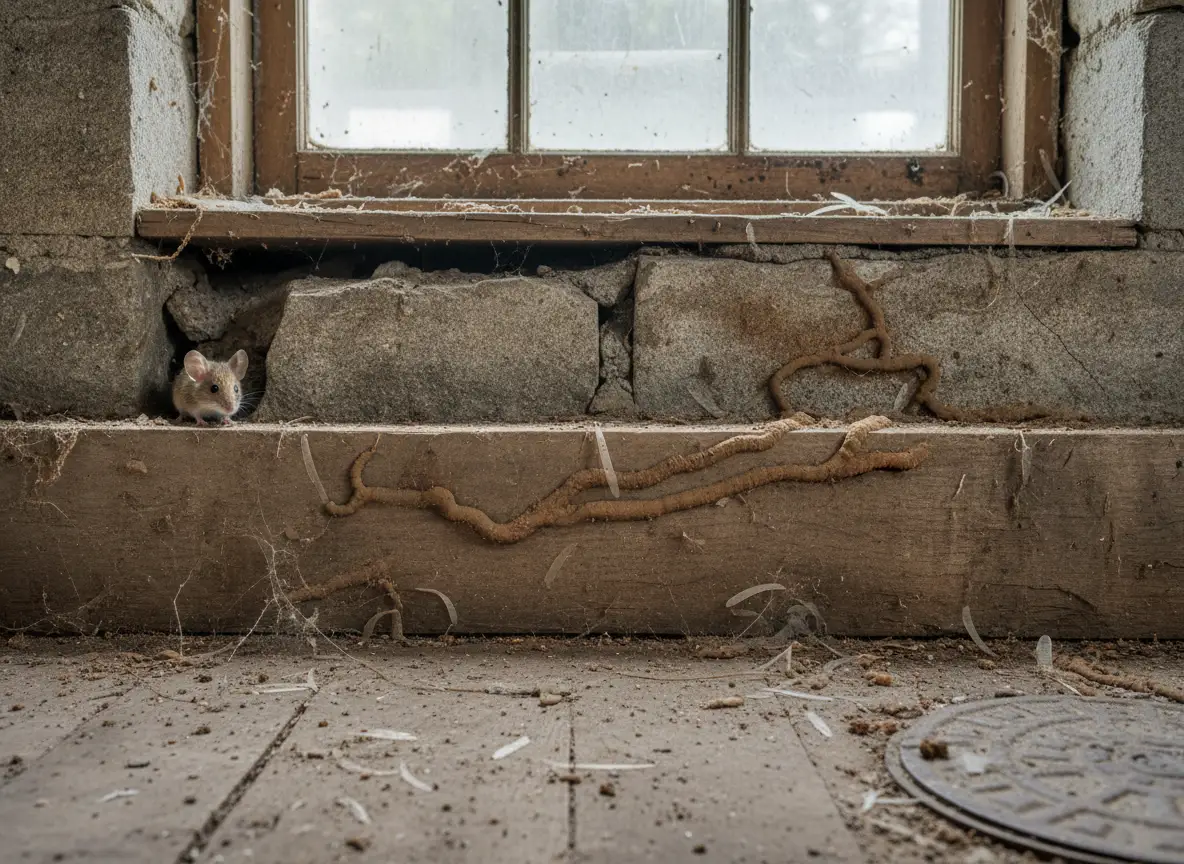
Eastern subterranean termites in Ohio live in the soil and reach wood through pencil-width mud tubes they build up foundation walls, piers and pipes. The 2 signs most homeowners spot are those brown mud tubes and, in spring and early summer, swarms of dark winged termites or piles of shed wings near windows and doors. If you find either one, save a sample or photo and call for a termite inspection at (888) 752-0103.
The termite Ohio homeowners actually deal with
Ohio State University Extension identifies the eastern subterranean termite, Reticulitermes flavipes, as the termite that damages buildings in Ohio, and rates the state's risk of subterranean termite infestation as "moderate to heavy." If you find termites in a Youngstown area house, it is almost always this species.
These termites nest underground. OSU Extension explains that one colony can feed at several wood sources at once, all linked by underground tunnels. Each feeding site is called a satellite nest. A mature colony can hold anywhere from 60,000 to 2 million workers, according to the National Pest Management Association (NPMA).
Because the colony lives in the soil, you almost never see the workers. You see the things they build and the swarmers they send out. Those are the 2 signs this guide covers.

How to spot mud tubes
Workers dry out quickly in open air, so they travel inside tubes. OSU Extension says the tubes are made from soil, termite droppings, saliva and bits of wood, and they are most often seen on outer walls and pillars close to the soil. NPMA notes termites can enter through openings as small as 1/16 inch.
Not every tube looks the same. Utah State University Extension describes 3 main types, and knowing them helps you understand what you are looking at.
Working tubes
These are the main roads. USU Extension describes them as the largest tubes, about 1/4 to 1 inch wide, built to carry thousands of foraging termites between the soil and the wood. In a basement they often run straight up the foundation wall to the sill plate, or up the side of a concrete step or porch slab.
Exploratory tubes
These are thin, fragile tubes that rise from the soil while termites search for new food. They can branch out and sometimes stop in mid-air. An abandoned exploratory tube still tells you termites were looking for wood in that spot.
Drop tubes
Drop tubes hang down from wood, like a beam, joist or subfloor, back toward the soil. USU Extension says they are built to make the working route shorter. Finding one in a crawlspace or unfinished basement usually means termites are already in the wood above.
Is the tube active?
Mississippi State University Extension suggests breaking off about 1 inch of tube and checking back in a few days. If termites rebuild it, or you see live termites inside, the colony is active. Take a clear photo before you touch it, because an inspector will want to see it as you found it. Do not spray it with an over-the-counter product, since that can make the termites move and harder to track.
Where to look: the inside and outside of the foundation, around basement window frames, along the sill plate, on piers in a crawlspace, around plumbing that goes into the slab, and anywhere soil, mulch or firewood touches the house.
Spring swarmers and what they mean
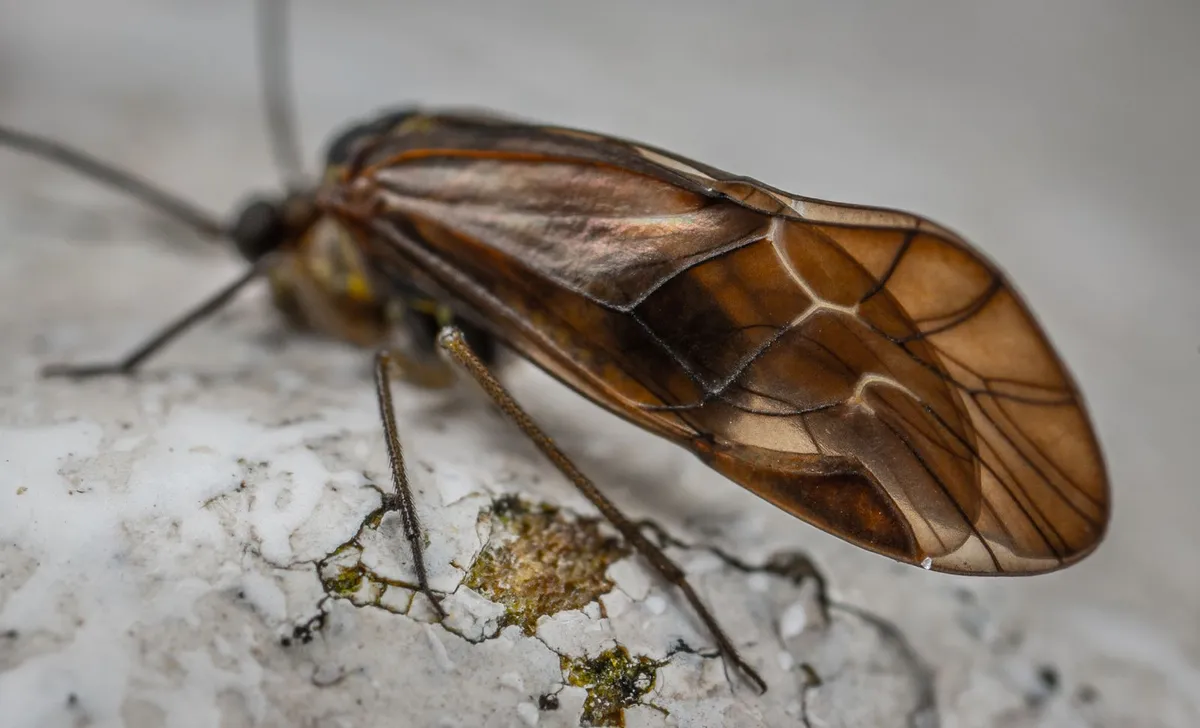
OSU Extension says eastern subterranean termites in Ohio swarm over spring and early summer. Swarmers, also called alates, are the winged adults that leave the colony to start new ones. OSU describes them as dark brown to black, with 2 pairs of wings that are the same size. USU Extension puts their length at about 1/4 to 3/8 inch, with wings that reach past the body.
Swarms usually last a short time. Most people find the evidence after the fact: a pile of shed wings on a windowsill, in a basement, or near a door. Swarmers are drawn to light, so they gather at windows and lights.
What a swarm means depends on where it happens:
- Swarm inside the house, especially in the basement or near a wall: there is very likely an established colony feeding in or under the house. Call for an inspection.
- Swarm outside on a stump or wood pile: there is a colony nearby. It is not proof your house is infested, but it is a good reason to have the foundation checked.
Swarmers do not chew wood or sting, and they die quickly indoors. You can vacuum them up. Save a few in a sealed bag or jar so the inspector can confirm what they are.
Termite swarmer or flying ant?
Winged ants swarm in spring too, so mix-ups are common. Black carpenter ants, the most common carpenter ant in Ohio according to OSU Extension, also tunnel in damp wood. OSU Extension and the U.S. Environmental Protection Agency (EPA) both point to the same 3 differences.
| Feature | Termite swarmer | Flying ant |
|---|---|---|
| Antennae | Straight, may droop | Bent at an elbow |
| Wings | 2 pairs, same length | Front wings longer than back wings |
| Waist | Thick, straight sides | Narrow, pinched waist |
| Damage inside wood | Galleries along the grain with dirt and droppings in them (OSU) | Carpenter ants leave smooth, sanded-looking tunnels with no soil, and push out shavings (OSU) |
Other signs of termite damage
Mud tubes and swarmers are the clearest signs, but NPMA also lists these:
- Wood that sounds hollow when tapped
- Bubbling or blistered paint
- Darkened or soft spots in wood trim or floors
- Shed wings near windows and doors
What to do if you find termites
Termites work slowly, so you have time to make a good decision. Do not tear into walls or floors, and do not try to treat the soil yourself. Liquid termiticides around a foundation have to be applied carefully, and EPA notes the work needs licensed professionals to avoid problems like contaminating a well.
Document it
Photograph tubes and damage. Save a few swarmers or wings in a sealed bag.
Book an inspection
A termite inspection checks the foundation, basement or crawlspace, sill plate and wood near soil, and tells you whether termites are active.
Pick a treatment
EPA describes 2 main methods: liquid termiticide applied to the soil around the foundation, and bait systems that use a slow-acting insecticide. Our termite treatment page explains how each works.
Fix the conditions
Reduce moisture and wood-to-soil contact so the house is less attractive to the next colony.
EPA recommends confirming that any termite company is licensed by the state. In Ohio, commercial pesticide applicators are licensed by the Ohio Department of Agriculture. Our treatments are applied by Ohio-licensed applicators following the product label. Questions? Call (888) 752-0103.
Buying or selling a home in the Youngstown area?
Many home sales ask for a wood-destroying insect (WDI) inspection, often written on the NPMA-33 form. The Ohio Department of Agriculture posts a copy of this form on its website. The form records whether visible evidence of termites or other wood-destroying insects was found in readily accessible areas and whether treatment is recommended. It states plainly that it is not a structural damage report, so hidden damage may still exist behind finished walls.
How to make your house less inviting to termites
EPA's prevention advice fits most Mahoning Valley homes:
- Keep soil and mulch from touching wood siding, trim or door frames.
- Make sure gutters and downspouts carry water away from the foundation.
- Store firewood away from the house, not stacked against it.
- Fill cracks in the foundation and gaps around utility lines.
- Do not plant shrubs tight against the foundation.
- Have the house inspected on a regular schedule.
We inspect homes across the Youngstown area, including Boardman and Poland, where many houses have basements, porches and landscaping that put wood and soil close together.
Termite questions from Ohio homeowners
When do termites swarm in Ohio?
OSU Extension says eastern subterranean termites in Ohio swarm over spring and early summer. Swarms are short, so most people find shed wings on windowsills or floors afterward. A swarm inside the house usually means a colony is feeding in or under the home.
Do termite swarmers damage wood?
No. Swarmers do not chew wood or sting, and they die quickly indoors. The damage is done by the worker termites that stay hidden in the soil and wood. The swarm is a sign of a mature colony nearby.
What do termite mud tubes look like?
They are brown, dirt-colored tubes about the width of a pencil or wider, running up foundation walls, piers, pipes or slabs. OSU Extension says they are made from soil, droppings, saliva and wood. Thin, branching tubes or tubes hanging from wood are also termite tubes.
How can I tell a termite from a flying ant?
Termite swarmers have straight antennae, 2 pairs of wings that are the same length, and a thick waist. Flying ants have bent antennae, front wings longer than the back wings, and a pinched waist. Saving a sample helps an inspector confirm it.
Can I treat termites myself?
We do not recommend it. Soil treatments around a foundation need special equipment and careful application, and EPA notes they should be done by licensed professionals. Over-the-counter sprays can also scatter termites and make them harder to find.
Found mud tubes or a pile of wings?
Send us a photo or tell us what you saw. We will inspect the foundation, basement and wood near soil and explain your options plainly.
Pest Control Youngstown OH is a locally owned pest control company. Treatments are applied by Ohio-licensed applicators following the product label.
Sources
- OSU Extension, Buckeye Yard and Garden onLine: Eastern Subterranean Termite, Reticulitermes flavipes
- Utah State University Extension, Subterranean Termites (PDF)
- Mississippi State University Extension, Signs of a Termite Infestation
- NPMA PestWorld, Subterranean Termites
- OSU Extension, Ohioline: Carpenter Ants (HYG-2063)
- U.S. EPA, Termites: How to Identify and Control Them
- Ohio Department of Agriculture, NPMA-33 Wood Destroying Insect Inspection Report (PDF)
- Ohio Department of Agriculture, Pesticide Regulation