
Termite Treatment in Youngstown, OH
Need termite treatment in Youngstown, OH? We confirm the termites first, then treat the soil around your foundation, set a baiting system, or use both, based on how your home is built. Every treatment is applied by an Ohio-licensed applicator following the product label.
Open 24 hours, 7 days a week
Eastern subterranean termites swarm in Ohio over spring and early summer. A swarm indoors is often the first sign people notice.
Source: OSU Extension BYGLThat is how the risk of subterranean termite infestation in Ohio is rated by Ohio State entomologists.
Source: OSU Extension BYGLOhio has a separate commercial applicator license category just for termite control, issued through the Ohio Department of Agriculture.
Source: OSU Extension ANR-0140Why a termite colony is hard to see from inside the house
Eastern subterranean termites live in the soil. Their colony is a network of feeding sites joined by underground tunnels, and workers build mud tubes to cross open concrete and reach wood.
This is why you can live above an active colony and never see a termite. Workers stay out of open air, so the mud tubes and soft wood are what give them away. It is also why treatment focuses on the soil and on bait, not on spraying the wood you can see.
Liquid soil treatment or a baiting system: how each one works
The EPA describes 2 main professional options for subterranean termites. Here is what each one means for your home, in plain words.
Liquid soil treatment
- How it works
- A termiticide is applied to the soil along the foundation to form a treated zone that termites contact as they tunnel through.
- Where it goes
- Into a shallow trench around the outside, and through drilled holes in concrete such as a basement floor, porch or garage slab where the label calls for it.
- At home
- Some drilling noise and patched holes. You stay out of treated areas until the technician says reentry is fine.
- Good fit
- Active termites, homes where the soil around the foundation can be reached, and jobs that call for a full treated zone.
Termite baiting system
- How it works
- Stations hold a cellulose bait with a slow acting insecticide. Workers feed on it and share it through the colony.
- Where it goes
- Stations are set in the soil around the house at set spacing, plus above ground stations on active tubes when needed.
- At home
- Very little disruption and less pesticide used overall. Stations need regular checks so the bait stays fresh and in use.
- Good fit
- Homes with wells or drains near the foundation, slabs that are hard to drill, or owners who want to limit soil treatment.
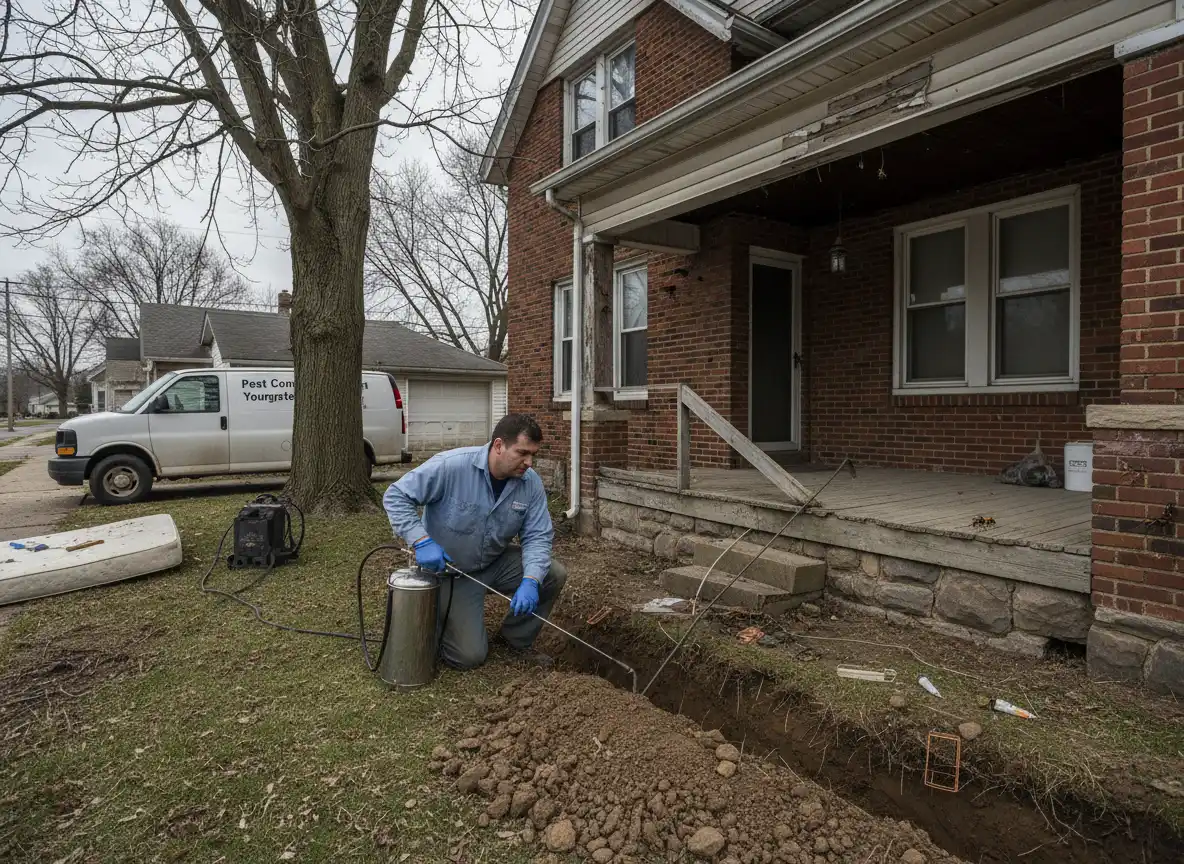
Many homes get a mix: liquid treatment where termites are active and baits where drilling or trenching is not a good idea. We explain the choice for your house before any work starts, and we do not promise a result based on a product name. The product label sets how much is used, where it goes and how close it can be to wells and drains.
How a termite job moves from inspection to treatment
Basement walls, sill plate, crawlspace, porches, garage and the outside foundation are checked for tubes, damage and moisture.
We make sure it is termites, not carpenter ants or old damage with no live activity.
Liquid, bait or both? It depends on activity, construction, wells, drains and access.
The applicator follows the label for rates, drilling and safety. You get notes on what was done.
Bait stations are serviced and treated areas are rechecked so new tubes get caught early.
Is it time for termite treatment in Youngstown, OH?
Tick what you have seen around your house. The first 4 are strong signs of live termites.
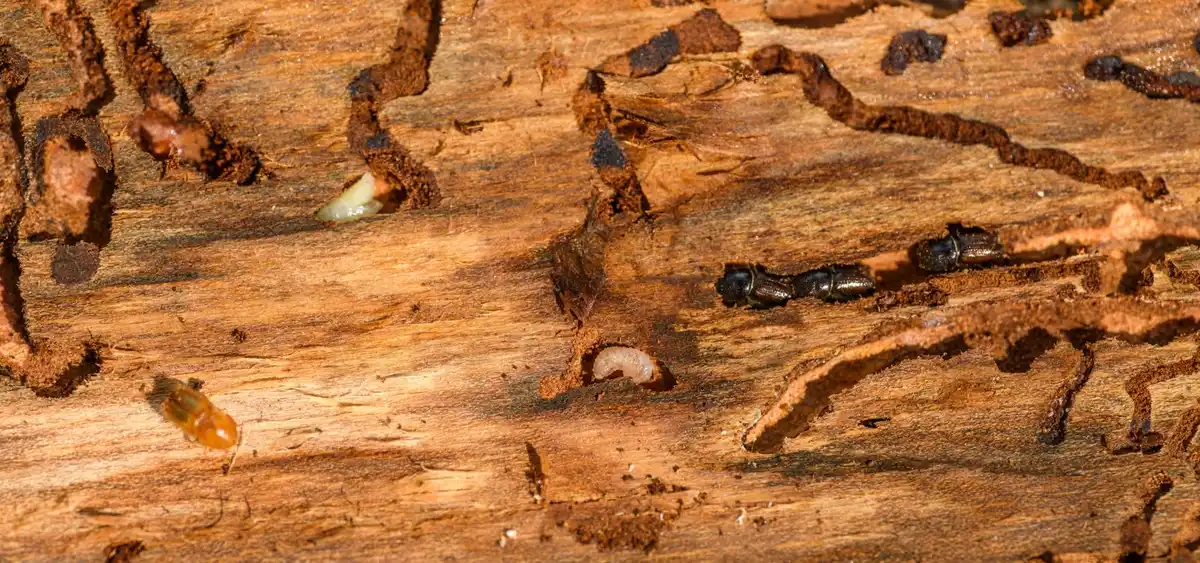
Not sure what you saw? Winged ants swarm too. Termite swarmers have straight antennae and 2 pairs of wings that are about equal in length. Carpenter ants have elbowed antennae, a pinched waist and front wings that are longer than the back pair. If it is ants, see our ant control page.
Termite treatment vs termite inspection
An inspection answers the question "are there termites?" Treatment is what happens when the answer is yes.
| Question | Termite treatment | Termite inspection |
|---|---|---|
| Main goal | Stop an active infestation and protect the structure | Find visible evidence of termites and damage |
| When to book | Termites are confirmed or strongly suspected | You are buying, selling or just want to check |
| What you get | Soil treatment, bait stations or both, plus follow-up | A written report, including an NPMA-33 form for many home sales |
| Pesticide used | Yes, applied by a licensed applicator per the label | No, it is a visual check with probing and sounding |
If you only need to know where things stand, start with a termite inspection in Youngstown. Treatment always starts with one anyway, so nothing is wasted. To make the house less inviting after treatment, our home sealing service handles gaps, and residential pest control covers the other pests.
Getting your home, kids and pets ready for treatment day
Prep is simple. Most of it is about giving the technician room to work and keeping people and pets clear.
- Clear 2 to 3 feet of space along basement walls where you can
- Move stored boxes off the floor near areas with tubes
- Show us wells, cisterns, sump pits, floor drains and buried lines
- Keep kids and pets away from treated areas as the technician directs
- Ask the reentry time for treated rooms before work begins
- Do not disturb or dig up bait stations after they are set
- Fix leaks and point downspouts away from the foundation
- Keep mulch thin and pulled back from siding
The EPA warns that soil treatments done the wrong way can contaminate a home or drinking water. That is why the applicator needs to know about any private well, cistern or drain before treating, and why we never give do-it-yourself advice for termiticides.
You can ask to see the applicator's Ohio license and the product label, as the EPA suggests. In Ohio, applying pesticides for hire takes a commercial license through the Ohio Department of Agriculture.
What sets the price of a termite job
We do not quote prices online, because no 2 houses are treated the same way. These are the things that change the work.
Termite treatment questions from Youngstown homeowners
Do I have to leave my home during termite treatment?
Usually not for the whole day. You stay out of the rooms being treated until the technician says it is safe to go back in, based on the product label. Ask about the reentry time before work starts, as the EPA suggests.
How can I tell termites from carpenter ants?
Termite swarmers have straight antennae, a thick waist and wings of about equal length. Carpenter ants have elbowed antennae, a pinched waist and longer front wings. Carpenter ant galleries are smooth and clean with shavings outside, while termite galleries hold soil.
Is liquid treatment or a bait system better?
Neither is best for every house. Liquid soil treatment builds a treated zone along the foundation, while baits use less pesticide and work through the colony over time. Wells, drains, slabs and where termites are active decide which one fits.
Can I treat termites myself?
Ohio State entomologists say subterranean termite control needs certified professionals, because a proper inspection is needed and the effective products are limited to licensed applicators. Store products do not reach the colony in the soil. Moisture fixes and moving wood off the ground are good things you can do.
How long does termite treatment take to work?
A liquid treatment is usually done in one visit, and termites are affected as they move through the treated soil. Baits work slowly on purpose, since workers have to find the bait and share it. Either way, follow-up checks show whether activity has stopped.
I have a private well. Can my home still be treated?
Often yes, but the method may change. The EPA notes that soil treatments done wrong can reach drinking water, and product labels set rules near wells. Tell us about wells, cisterns and drains so the plan fits the label.
Want the biology in more detail? Read our guide to mud tubes and spring swarmers in Ohio, or see every Youngstown area we serve.
Get a termite plan built for your foundation
We serve Youngstown, Boardman, Austintown, Poland and nearby Mahoning County homes. Call and tell us what you found.
Pest Control Youngstown OH is a locally owned pest control company. Treatments are applied by Ohio-licensed applicators following the product label.
Sources
- OSU Extension, Buckeye Yard and Garden onLine: Eastern Subterranean Termite
- U.S. EPA, Termites: How to Identify and Control Them
- OSU Extension Ohioline, Carpenter Ants (HYG-2063)
- OSU Extension Ohioline, Ohio Commercial Pesticide Applicator Requirements (ANR-0140)
- Ohio Department of Agriculture, Pesticide Regulation
- U.S. EPA, Introduction to Pesticide Labels